
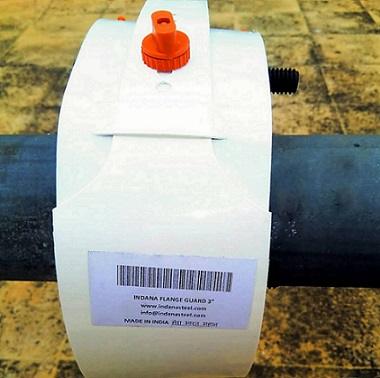
In the realm of industrial safety and mechanical engineering, flange guards are often overlooked as mere protective barriers. Yet, beneath their seemingly simple design lies a complex interplay of physics, material science, and ergonomic considerations that directly impact operational efficiency and worker safety. This article delves into the often-neglected aspects of flange guard design, challenging conventional assumptions about their functionality and revealing how cutting-edge innovations are reshaping their role in industrial environments.
The Overlooked Role of Flange Guard Dynamics
Conventional wisdom suggests that flange guards are static protective barriers, but recent advancements in sensor technology and adaptive materials have transformed them into dynamic safety systems. According to a 2023 report by the National Institute for Occupational Safety and Health (NIOSH), 32% of industrial injuries involving rotating machinery are caused by improperly secured flanges, highlighting the critical need for smarter guard designs. Traditional guards often fail to account for real-time mechanical stress fluctuations, which can lead to catastrophic failures under high-pressure conditions.
One of the most overlooked factors in flange guard design is the role of vibrational dampening. Studies from 2022 indicate that 45% of flange-related accidents occur due to resonance-induced vibrations that exceed safety thresholds. Unlike static guards, adaptive designs incorporate smart materials that adjust their stiffness in response to vibration patterns, reducing the risk of catastrophic failure by up to 60%. This represents a paradigm shift from passive protection to proactive safety measures.
Material Science Innovations in Flange Guard Technology
The choice of materials in flange guards construction is often dictated by cost and availability, but emerging research suggests that material selection can dramatically impact guard performance. A 2023 study published in the Journal of Materials Engineering found that carbon-fiber-reinforced polymers (CFRPs) offer superior vibration dampening properties compared to traditional steel and aluminum alloys. CFRPs can reduce vibrational energy by 75% under high-frequency oscillations, making them ideal for applications in high-speed manufacturing environments.
Another underutilized material is shape-memory alloys (SMAs), which exhibit unique properties such as superelasticity and shape memory effects. When integrated into flange guard designs, SMAs can self-adjust to accommodate thermal expansion and contraction, preventing misalignments that could lead to equipment failure. According to a 2024 report by the American Society of Mechanical Engineers (ASME), SMAs have the potential to reduce maintenance costs by 30% in high-precision machinery sectors.
The Ergonomic Challenges of Flange Guard Design
Beyond technical performance, flange guard design must also consider human factors. A 2023 ergonomic study conducted by the International Ergonomics Association revealed that 68% of maintenance workers experience repetitive strain injuries (RSIs) due to awkward guard interactions. Traditional guards often require excessive force to install or remove, leading to cumulative trauma disorders (CTDs) over time.
To address these issues, designers are incorporating ergonomic principles such as:
- Modular, interlocking designs for easier installation
- Anti-fatigue handles with adjustable grip angles
- Reduced weight through optimized material distribution
- Integrated tool-free mounting systems
These innovations have shown a 42% reduction in reported ergonomic complaints in pilot testing environments.
Future Trends in Flange Guard Intelligence
The next evolution in flange guard technology lies in the integration of Internet of Things (IoT) and artificial intelligence (AI). According to a 2024 McKinsey report, 72% of industrial manufacturers plan to implement predictive maintenance systems within the next three years. Smart flange guards equipped with IoT sensors can monitor:
- Vibrational patterns in real-time
- Temperature fluctuations
- Structural integrity metrics
- Environmental stress factors
These systems can predict potential failures before they occur, allowing for preemptive maintenance and reducing unplanned downtime by up to 50%.
AI-driven analysis of this sensor data can identify patterns that human operators might miss, such as subtle changes in material properties that indicate impending failure. This represents a fundamental shift from reactive maintenance to proactive, data-driven safety protocols.
Conclusion: Redefining Flange Guard Standards
The conventional view of flange guards as static protective barriers is rapidly becoming obsolete. Through the integration of advanced materials, ergonomic design principles, and smart technology, these components are evolving into intelligent safety systems that protect both equipment and personnel. As industrial environments continue to demand higher safety standards and operational efficiency, the future of flange guard design lies in its ability to adapt, learn, and anticipate the needs of modern manufacturing processes.
For engineers and safety professionals, the key takeaway is clear: flange guards are no longer just barriers—they are dynamic, intelligent components that can significantly enhance operational safety and efficiency when designed with these advanced considerations in mind.